Truffles
Champagne
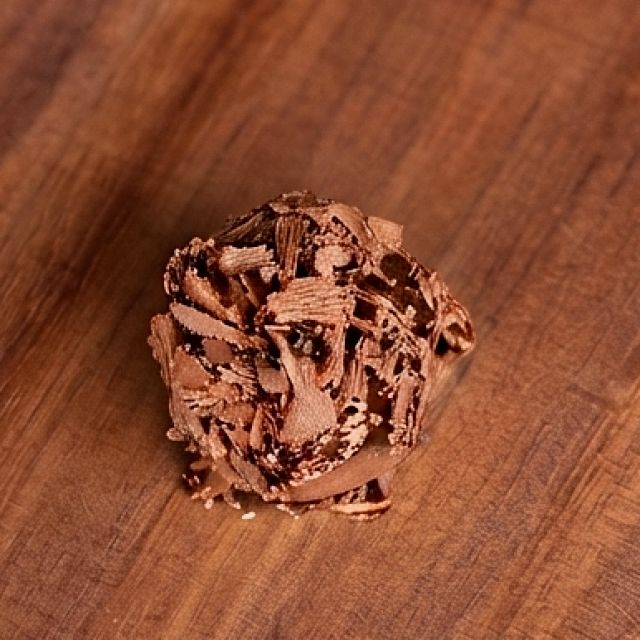
The house signature, chocolate shavings

Chocolate as an act of memory.
Artisan chocolates born in the farm where, according to legend, the Emperor was born. Patented essential-oil infusion process. Pure cocoa butter, no vegetable oil whatsoever. Unrivalled quality.
Pepin of Herstal
Palatium publicum
Birth of
Charlemagne
Capitulary
of Herstal
Founding of
the house
Isetan Shinjuku
Tokyo
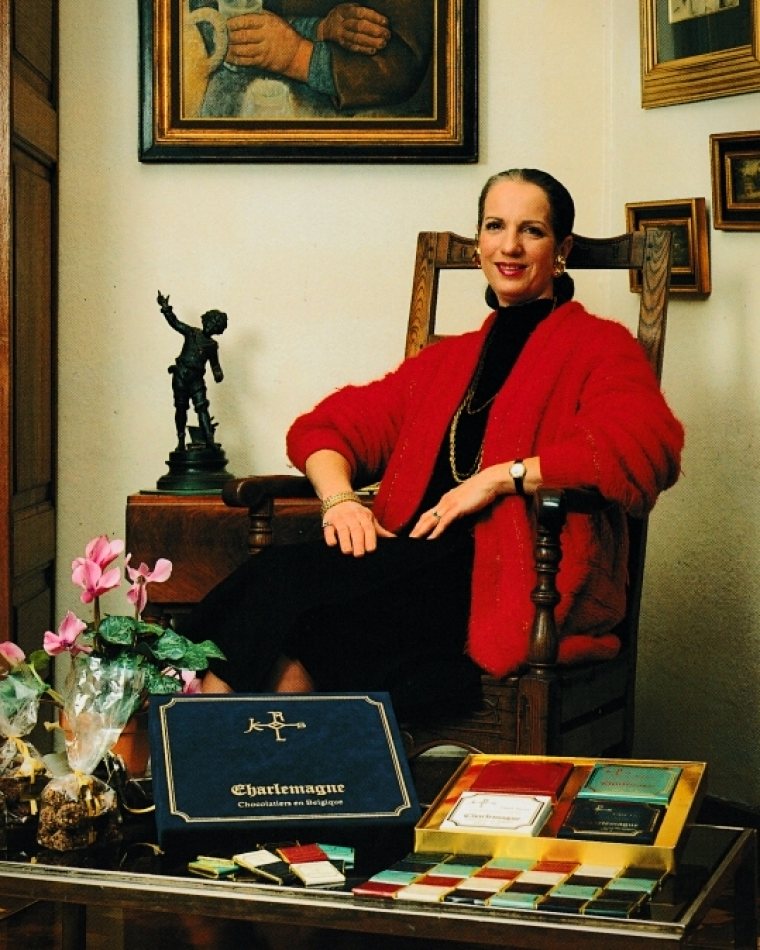
Founder
Denise Courant-Bellefroid founded Charlemagne Chocolatiers in the old farm on Place Jacques Brel in Herstal, the very place where, according to legend, Emperor Charlemagne was born.
There she perfected a patented process: flavouring chocolate in the mass with natural essential oils. Today her son François Courant-Bellefroid carries on and develops this heritage.
The house signature, chocolate shavings
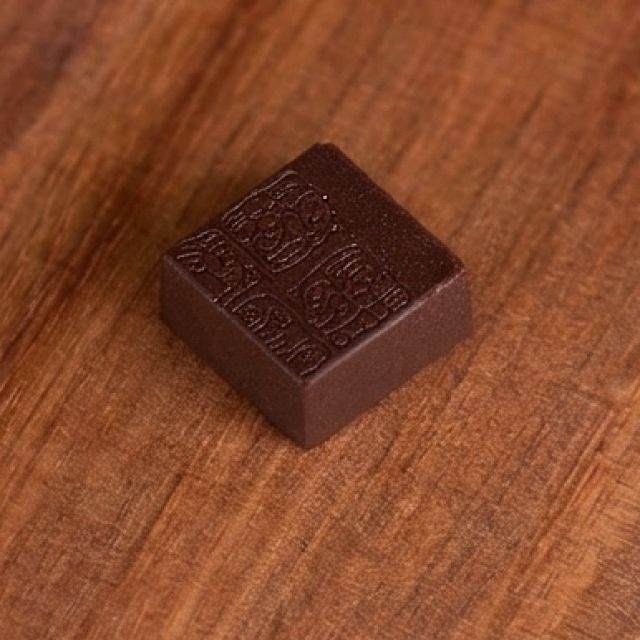
Engraved dark chocolate, flowing caramel

Candied orange peel, dark chocolate
Infusing essential oils into the cocoa mass has made the house one of the world references in chocolate innovation. This is no surface flavouring: the oil melts into the cocoa and becomes structural.
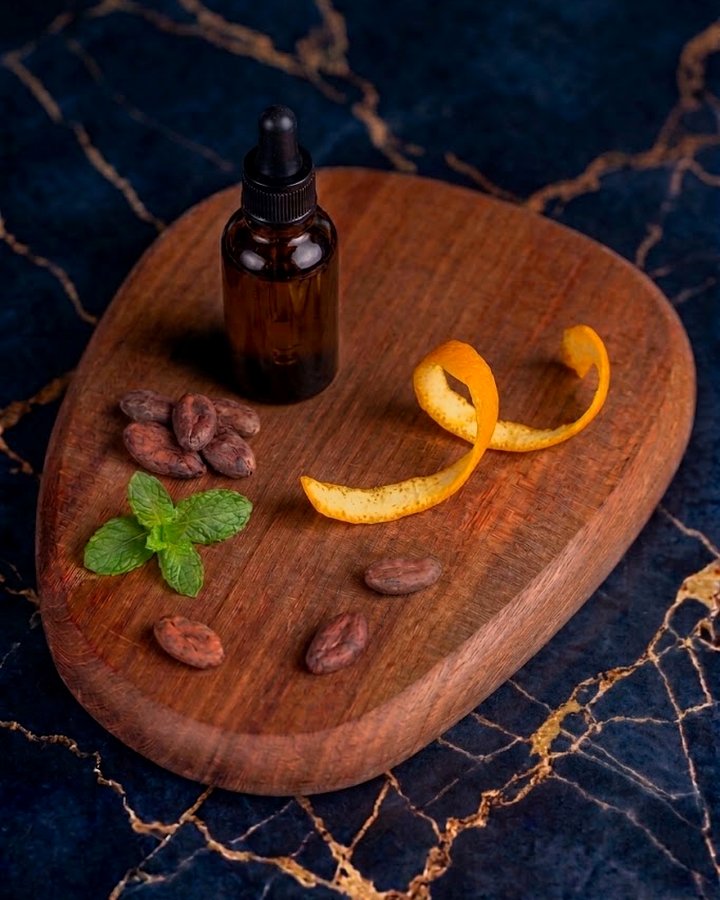
Aroma in the mass, never on the surface
Present on the Japanese market since the 2000s, one of the most demanding in the world. In 2020 the house took part in the Salon du Chocolat at Isetan Shinjuku, Tokyo.
Today, 90% of production goes abroad: Japan, France, Germany, Great Britain, Sweden, Latvia, Saudi Arabia, the United States, China. The house's truffles and pralines are reserved for luxury specialist shops, grand hotels and first-class services.
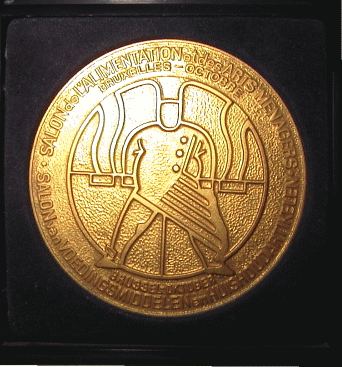
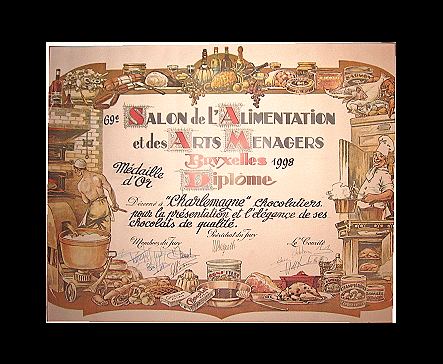
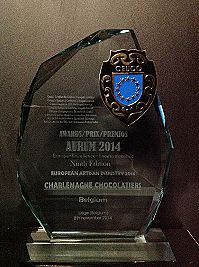
Gold Medal
Brussels
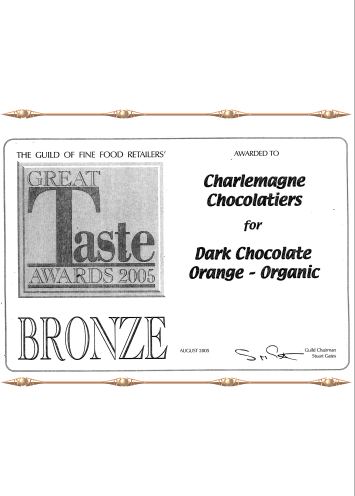
Great Taste Award
London
Aurum Trophy
Liège
Salon du Chocolat
Tokyo
From a Carolingian palace to a world-renowned chocolate maker. The history of Place Jacques Brel is among the densest in Belgium.
This is the story Denise always told by way of introduction, whenever visitors came to the chocolaterie. The house legend, as it has been passed down in the family.
Once upon a time, in the smiling valley of La Préalle, a cheerful mill sheltered the love of Charlemagne's parents. There, around the year 742, he was born.
On this ground steeped in history, in a magnificent 17th-century farmhouse, a gourmet artist, Denise Courant-Bellefroid, developed an exceptional chocolate and innovated by creating "flavour in the mass": before Charlemagne chocolates, flavour always hid inside the filling or the ganache, wrapped in dark, milk or white chocolate.
Our gourmet artist chose to follow the spirit of nouvelle cuisine: less sugar, less fat, and a return to the natural. Her flavourful creations were rewarded with numerous international prizes and worldwide patents for chocolates with spices, fruits, flowers, coffee and teas.
Today, her son François carries the house forward, true to this great tradition of quality.
Herstal was one of the centres of power in Europe. Pepin of Herstal, mayor of the palace of Austrasia and great-grandfather of Charlemagne, established his residence here in the 7th century. Between 723 and 920, twenty-three diplomatic acts mention the place, seven of them dated at Herstal itself. The charters call it palatium publicum and then, after the imperial coronation of 800, palatium regium: the palace of the king.
It is in this context that tradition places the birth of Charlemagne in 742, at Herstal or nearby Jupille. Historians still debate the exact place. The link between the Emperor and this land, however, is documented by the charters.
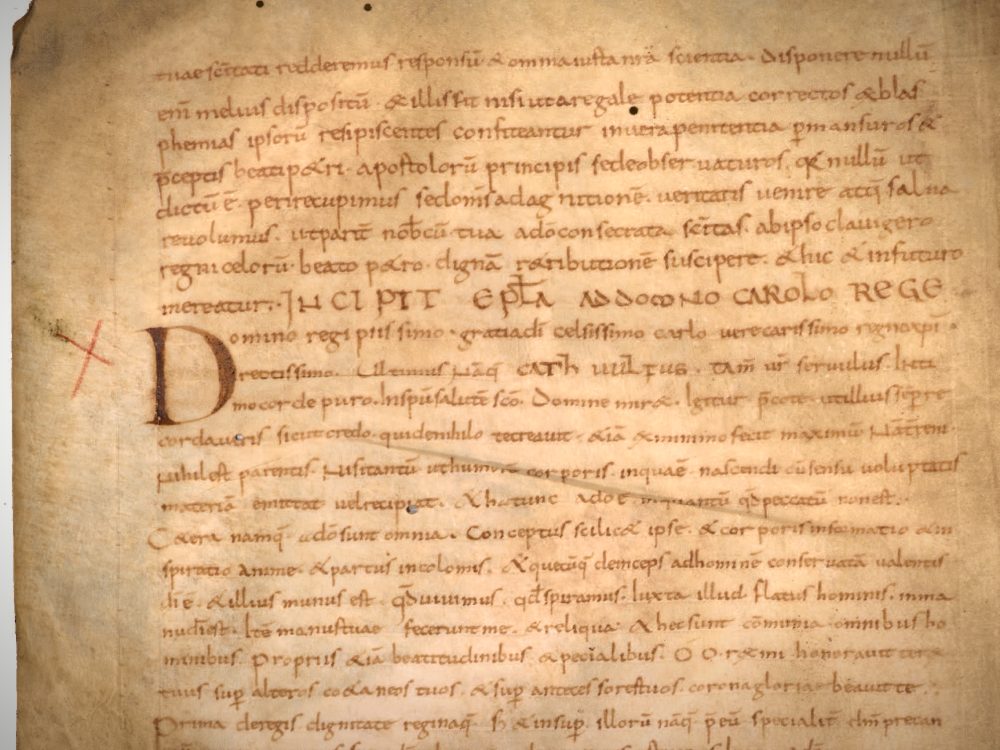
9th-century manuscript · Abbey of Saint-Denis
In March 779, before an assembly of bishops, abbots and counts, Charlemagne promulgated at Herstal the first great capitulary of his reign. Its twenty-three articles reorganised the religious and public life of the kingdom: the authority of bishops, the punishment of homicide and perjury, the protection of widows and travellers, the regulation of markets and tolls.
It is the first text to use the word capitulare in a legislative sense, and the historian Carlo De Clercq saw in it a founding charter given to all the territories of the Frankish kingdom. Every great text that followed, up to the imperial coronation of 800, proceeds from it. It is in this farm, raised on the palace domain, that the house chose to establish its workshop.
A few years before the Capitulary, a cleric named Cathwulf sent Charlemagne a letter of exhortation listing the eight pillars that uphold the reign of a just king. Fourteen of the twenty-three themes of the Capitulary of Herstal already appear in it. Some historians connect these eight pillars to the octagon of the palatine chapel at Aachen.
After Julien Maquet, The capitulary of Herstal (779) and the letter of Cathwulf to Charlemagne
Walloon heritage inventories describe an 11th-century farm built on the site of a mill that belonged to Charlemagne's family. Its Carolingian-era base suggests it was already part of Pepin of Herstal's palace.
The present quadrangular building was erected in sandstone rubble, brick and limestone. Its oldest parts date from the late 16th century, the most recent from the 18th. Until 1795 the farm belonged to the Saint-Mathieu à la Chaîne hospital, hence its other name: the Chain farm. It is also known as the Cajot farm, after the last farmer, who worked it until 1985.
Denise Courant-Bellefroid set up her chocolate workshop within the farm walls. There she developed the process that would bring the house worldwide renown: infusing natural essential oils into the chocolate mass. This patent would raise the house among the most innovative chocolate makers in the world.
Trained in the hotel trade in Liège, Denise had developed a passion for the history of cooking, above all that of the Middle Ages and the Renaissance. This gourmet erudition, joined to an exceptional palate, gave birth to the founding idea: marrying cocoa with spices, fruits, flowers, coffee and tea.
Today her son François Courant-Bellefroid leads and develops the house, carrying the family heritage to new markets, from Japan, where the house has been present since the 2000s, to connoisseurs worldwide.
“Thirteen centuries of history beneath our feet. Every chocolate carries its memory.”
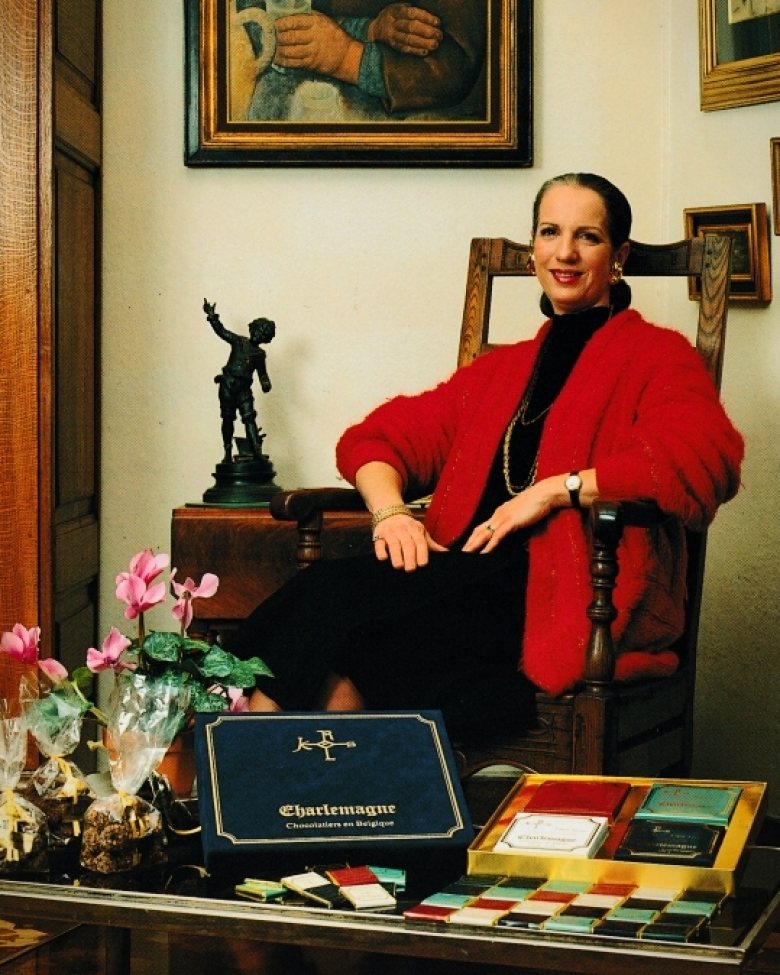
Founder
Charlemagne probably could not write fluently. To sign his acts he used a monogram: the letters K, R, L and S of Karolus, arranged around a central lozenge to form a cross. The sovereign himself drew the final stroke at the centre, thus validating charters and capitularies by his own hand.
This sign, one of the most famous of the Middle Ages, is today the registered trademark of the house, filed with the European Union Intellectual Property Office. Every Charlemagne box bears the Emperor's very signature.
The navy and gold of our boxes are no recent choice: they have accompanied the house since its earliest years, stamped with the monogram of Karolus.
After the Carolingian era, the land of Liège wrote one of Europe's most singular political histories. Around 980 Bishop Notger obtained temporal power over the city: thus was born the Principality of Liège, an independent state within the Holy Empire, governed by its prince-bishops for more than eight hundred years, until 1795.
Herstal held a place apart. A free seigneury, the land of Herstal long belonged to great European houses, including Orange-Nassau, before being bought in the 18th century by the Prince-Bishop of Liège. Birthplace of the Carolingian dynasty turned coveted enclave, it crossed the centuries keeping its own identity.
From this history the region inherits a temperament: a taste for independence, pride in the work of hands, and the Mosan art that made the goldsmiths of the Meuse shine across Europe. It is this lineage of artisans that the Charlemagne house carries on, within its walls at La Préalle, since 1974.
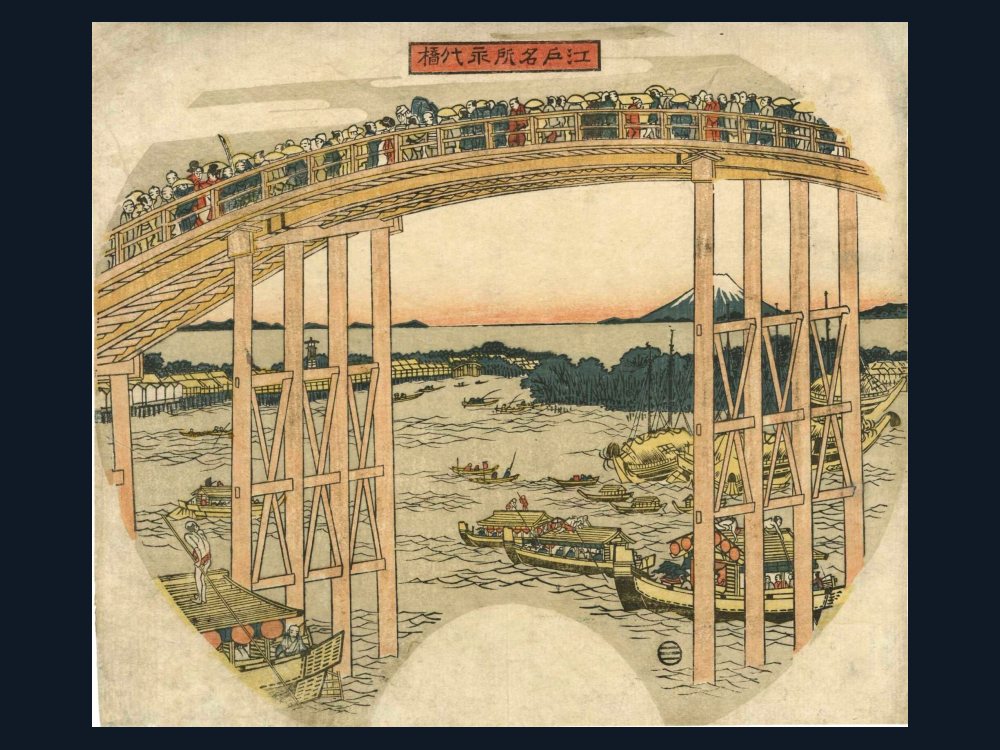
Woodblock print · Chikuma founded at its foot in 1688
By the Sumida River, at the foot of Eitai Bridge, a house has kept its name since 1688. Chikuma Miso, once honoured by the visit of the forty-seven rōnin of Akō and celebrated on the kabuki stage, measures time as we do: in centuries, in gestures handed down, in loyalty. May the house of Edo that grants us its trust receive here the respectful salute of the house of Herstal. Two distant lands, one same patience.
A patented process, a farm steeped in history, hands shaping every piece. Patience, precision, singularity.
Most flavoured chocolates receive their aromas on the surface. At Charlemagne the approach is the reverse: natural essential oils are blended directly into the melted cocoa mass, before any moulding. This is not an applied perfume. It is a flavour built from within.
This patented process, developed by Denise Courant-Bellefroid, raised the house among the most innovative chocolate makers in the world. It is its taste signature: a very fine chocolate, long on the palate, with persistent natural aromas.
“The essential oil does not perfume the chocolate. It transforms it.”
The quality of a chocolate begins with the fat that composes it. European regulation allows up to 5% vegetable fats in chocolate. The great houses refuse this tolerance. So does Charlemagne.
Cocoa butter is what gives chocolate its clean snap, its precise melting curve at body temperature, that velvety texture nothing else can reproduce.
Down to the couvertures: the house works on its own recipes, developed within its walls.
Cocoa butter
Exclusive fat
Vegetable oil
No substitution
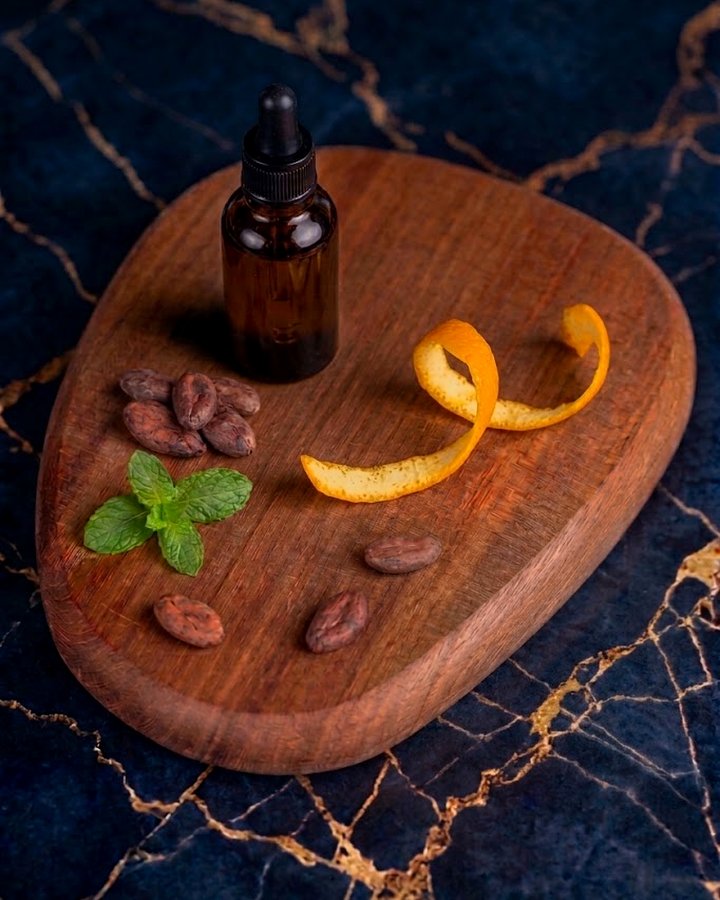
Cocoa butter begins here
Truffles, pralines, candied peels, squares: each category follows its protocol. But one principle runs through every line: the human hand is not bypassed. Rolling the truffles, visually checking every piece, these gestures cannot be delegated.
In an industry that optimises, the house chooses to slow down. Production remains limited. That is the price of a quality guaranteed piece after piece.
Founded
Patented process
Natural oils
Every piece is made following the house's patented process: natural aromas infused into the cocoa mass.
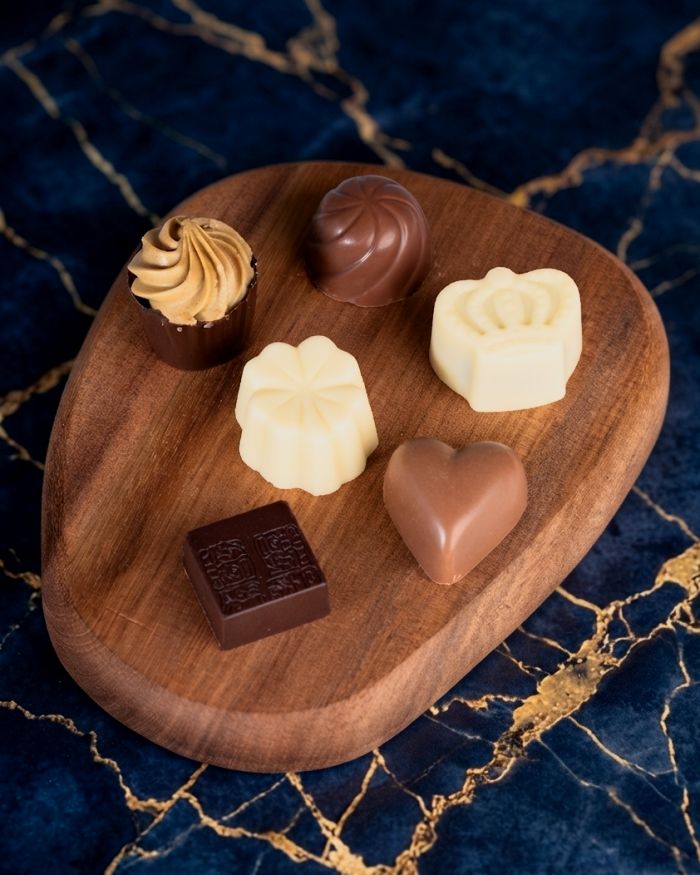
Moulded pieces with a melting centre
Engraved dark chocolate, flowing caramel
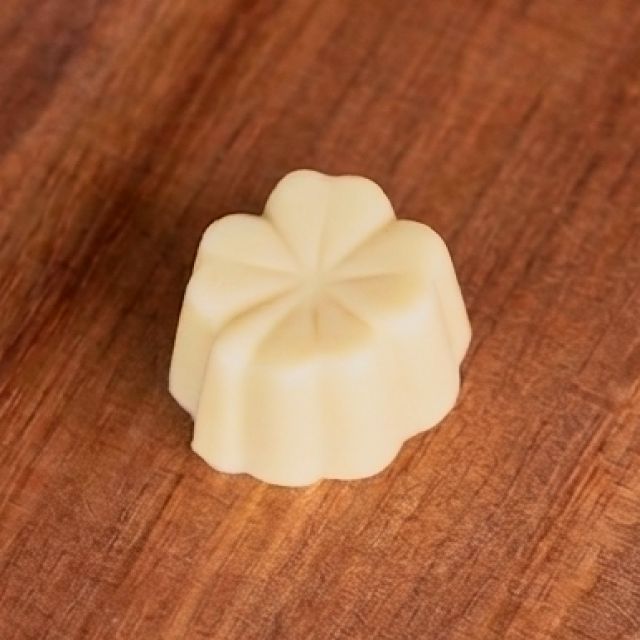
White chocolate, lemon essential oil
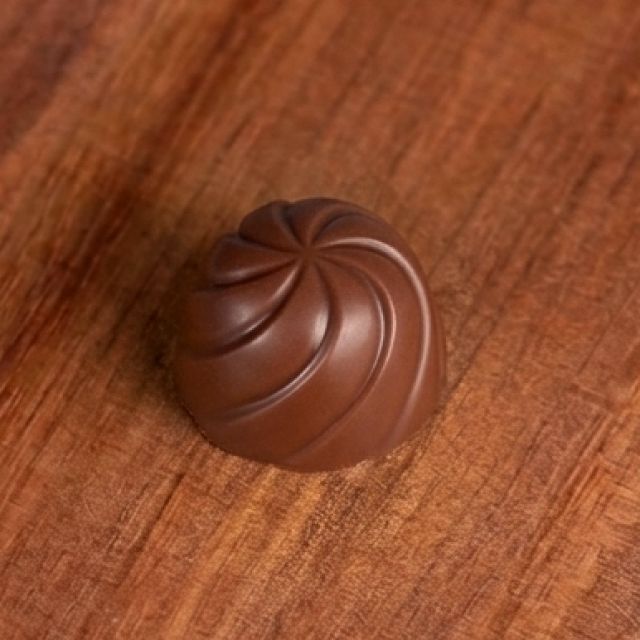
Swirled milk chocolate, raspberry centre
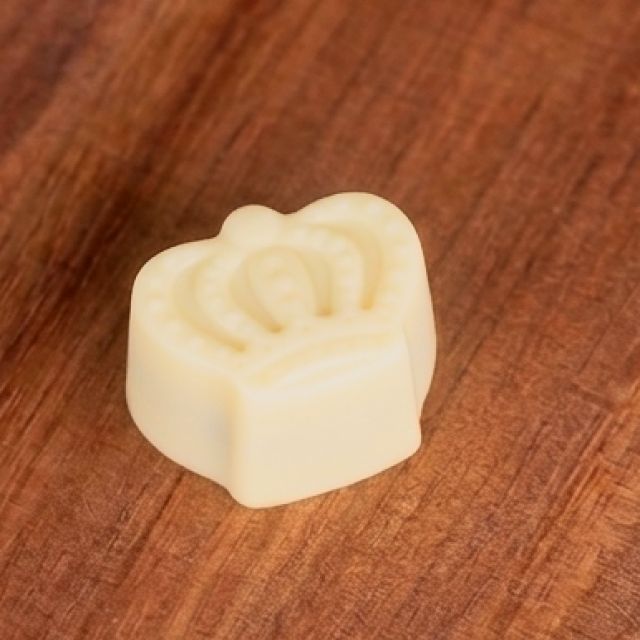
White chocolate crown, aromatic filling

Milk chocolate heart, hazelnut praline

Chocolate cup, piped pistachio ganache
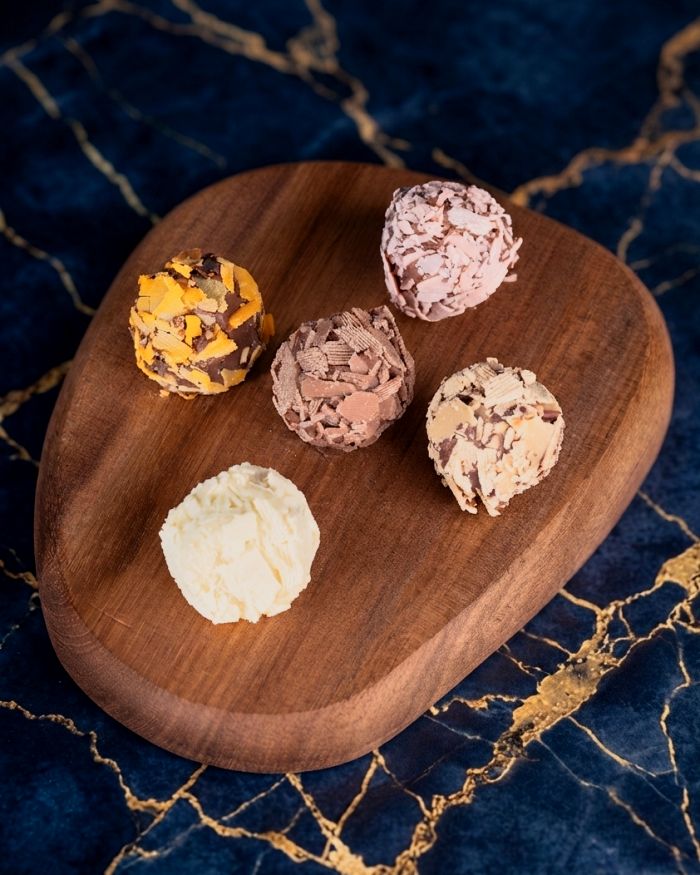
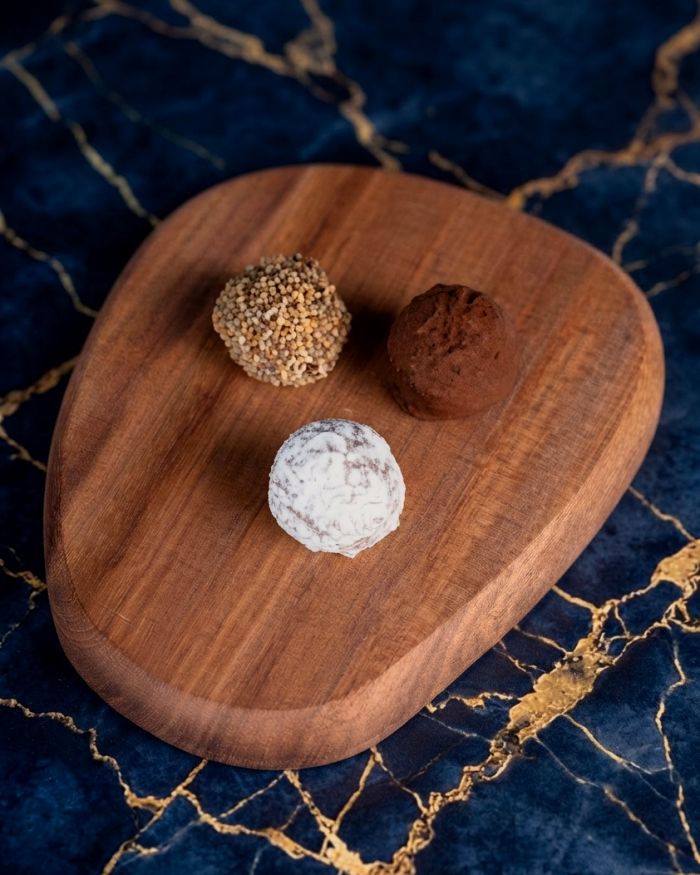
Hand-rolled, coated one by one
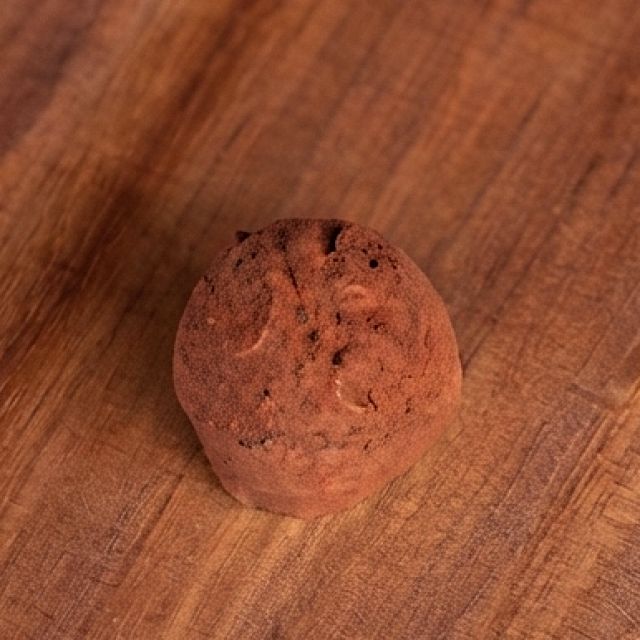
Pure ganache, cocoa powder
The house signature, chocolate shavings
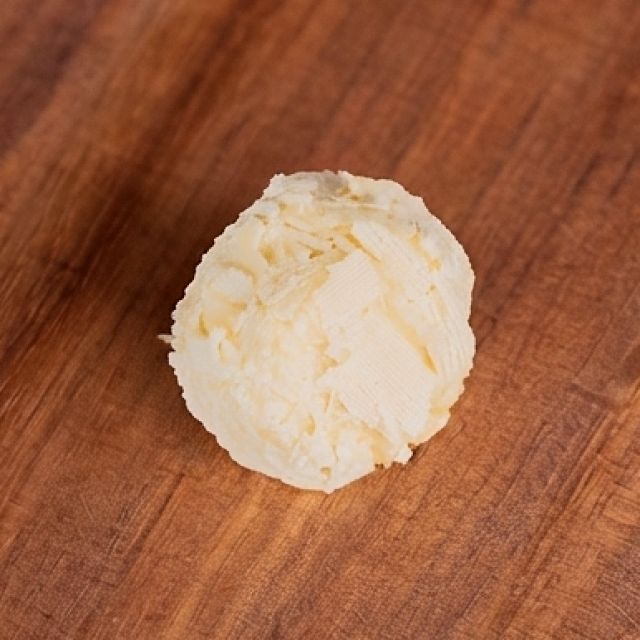
Ivory ganache, white chocolate shavings
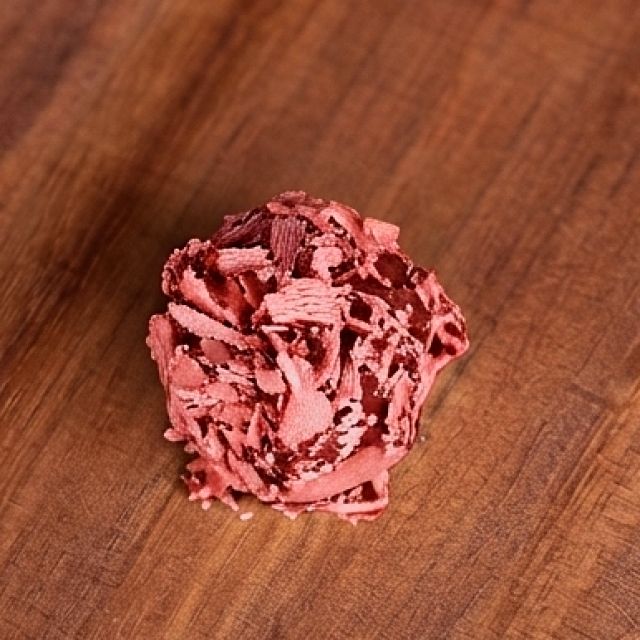
Fruity ganache, rosy shavings
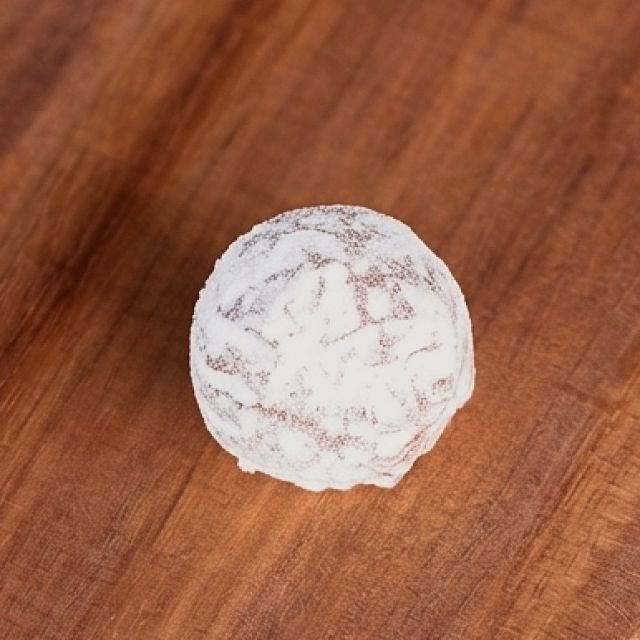
Raspberry ganache, icing sugar
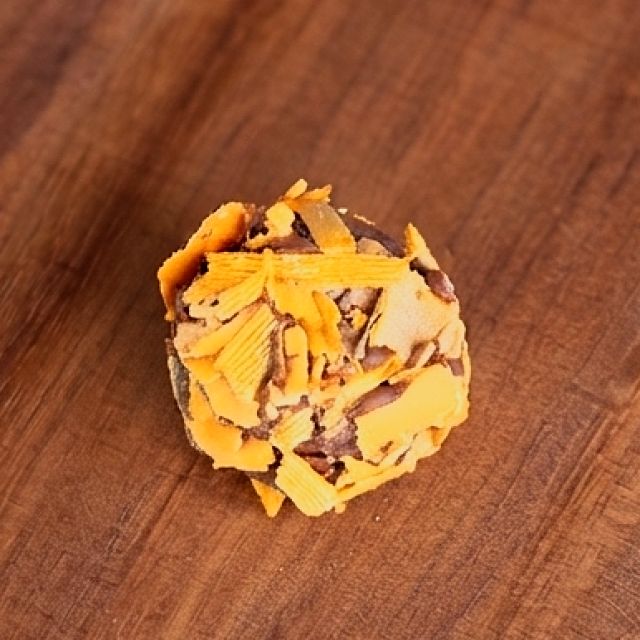
Ganache with orange essential oil
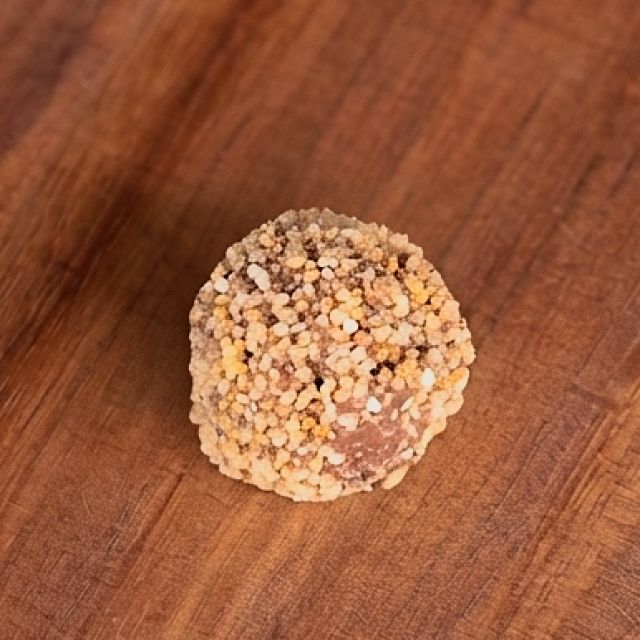
Praline ganache, hazelnut pieces
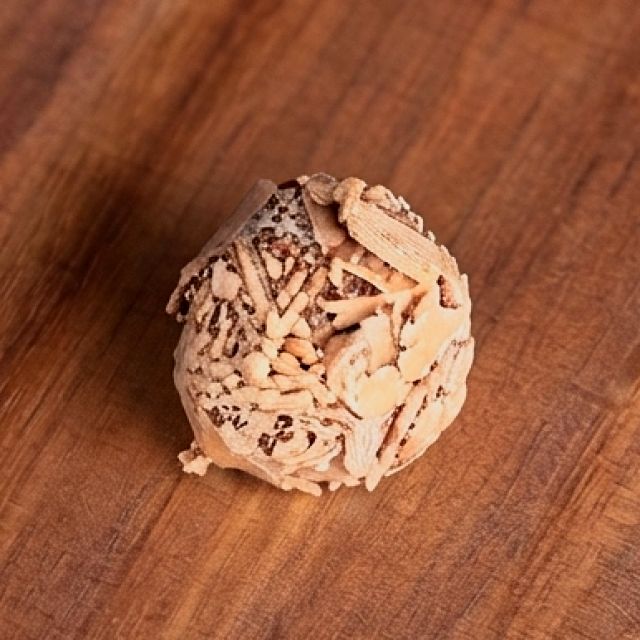
Caramel ganache, flaked almonds
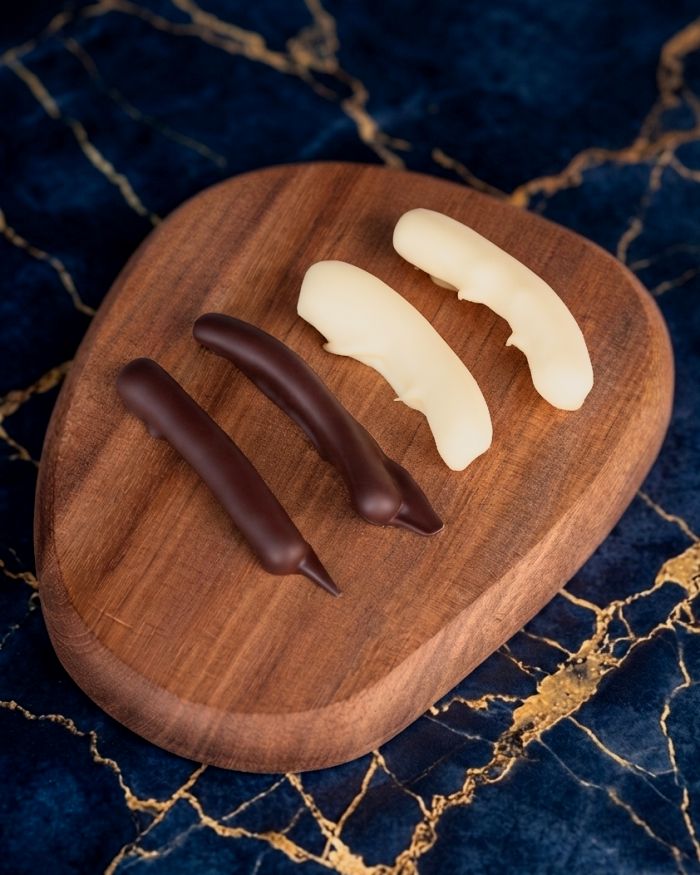
Candied citrus peel, chocolate-enrobed
Candied orange peel, dark chocolate
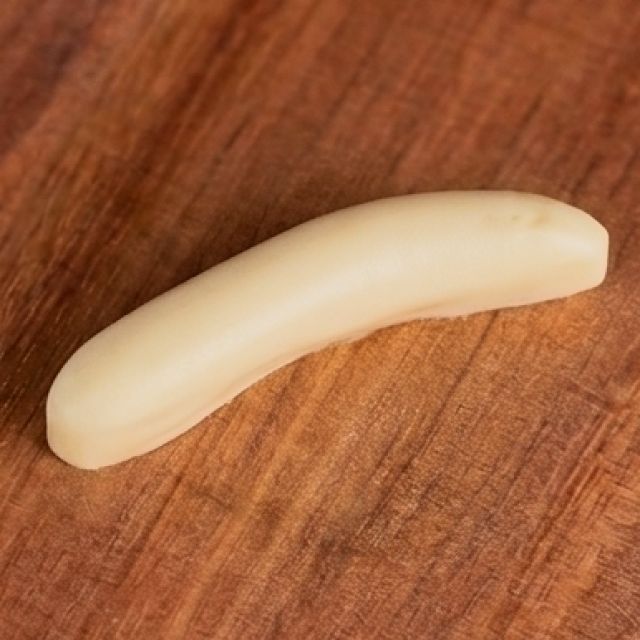
Candied lemon peel, white chocolate
To discover the house
Made in a workshop handling milk, soy, tree nuts and gluten.
Place Jacques Brel 8
4040 Herstal, Liège
Belgique
Téléphone : 0497 90 20 21
International distribution : Belgian Fine Food
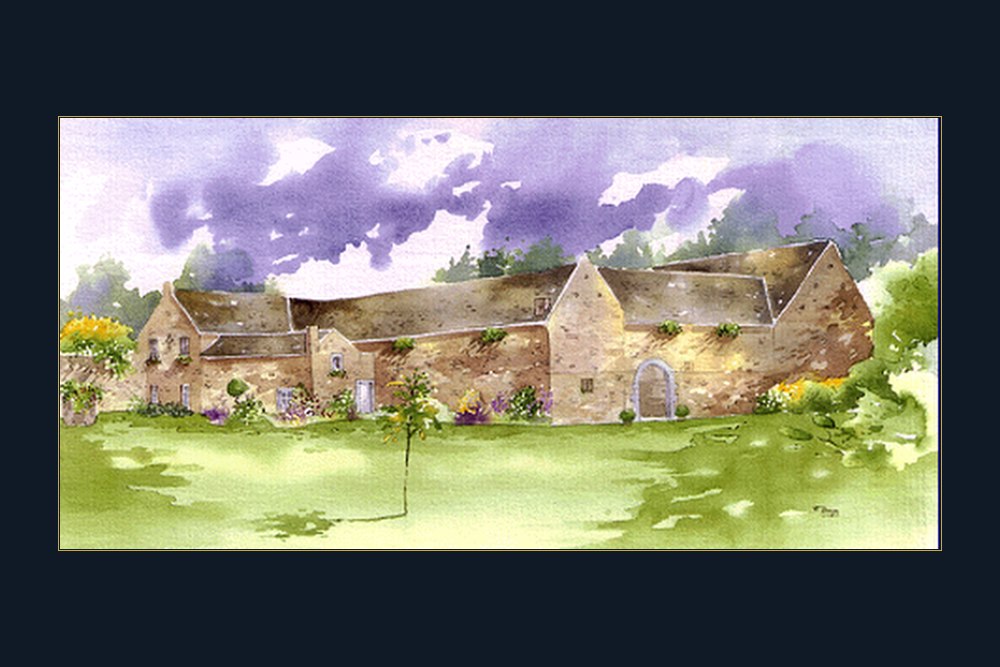
Watercolour · seen from the far end of the garden
Éditeur du site
Bijouterie Charlemagne SRL, qui exploite la marque Charlemagne Chocolatiers
Siège social : Place Jacques Brel 8, 4040 Herstal, Belgique
Numéro d'entreprise (BCE) : 1016.500.612
TVA : BE 1016.500.612
Email : contact@charlemagnechocolatier.com
Responsable de la publication
François Courant-Bellefroid
Hébergement
Netlify, Inc., PO Box, PMB 87587, San Francisco, CA 94120-7775, États-Unis (netlify.com)
Propriété intellectuelle
L'ensemble des contenus de ce site (textes, photographies, identité visuelle) est la propriété de Charlemagne Chocolatiers. Le monogramme de Karolus est une marque déposée auprès de l'EUIPO au nom de la société. Le procédé d'infusion aux huiles essentielles fait l'objet d'un brevet. Toute reproduction sans autorisation écrite est interdite.
Droit applicable
Le présent site est soumis au droit belge, conformément au Livre XII du Code de droit économique. Tout litige relève des tribunaux de l'arrondissement judiciaire de Liège.
Responsable du traitement
Bijouterie Charlemagne SRL (marque Charlemagne Chocolatiers), Place Jacques Brel 8, 4040 Herstal, Belgique. Contact : contact@charlemagnechocolatier.com
Données collectées
Avec votre accord, ce site utilise Google Analytics (via Google Tag Manager) pour mesurer sa fréquentation. Cette mesure ne s'active qu'après votre consentement, demandé à votre première visite ; vous pouvez l'accepter, le refuser, ou revenir sur votre choix à tout moment via le lien « Gérer les cookies » en bas de page. Sans consentement, seuls deux réglages sont conservés localement sur votre appareil (localStorage) : votre préférence de langue et votre choix concernant les cookies. Ils ne quittent jamais votre navigateur. Lorsque vous nous écrivez par email, nous traitons vos coordonnées et le contenu de votre message aux seules fins de vous répondre.
Cookies et mesure d'audience
Si vous acceptez, Google Analytics dépose des cookies de mesure d'audience, conservés au maximum treize mois. Ils servent uniquement à comprendre la fréquentation du site ; aucune donnée n'est utilisée à des fins publicitaires ni revendue. Si vous refusez, aucun cookie de mesure n'est déposé et votre navigation n'est pas affectée.
Base légale et conservation
Le traitement des correspondances repose sur notre intérêt légitime à répondre aux demandes (article 6.1.f du RGPD). Les échanges sont conservés le temps du suivi de la demande, puis au maximum trois ans, sauf obligation légale contraire.
Vos droits
Conformément au RGPD et à la loi belge du 30 juillet 2018, vous disposez des droits d'accès, de rectification, d'effacement, de limitation, de portabilité et d'opposition. Pour les exercer : contact@charlemagnechocolatier.com.
Réclamation
Autorité de protection des données, Rue de la Presse 35, 1000 Bruxelles. www.autoriteprotectiondonnees.be
Transferts
Aucune donnée n'est vendue ni louée. Si vous acceptez la mesure d'audience, les données de navigation sont transmises à Google (Google Ireland Limited), prestataire de Google Analytics. Google peut les traiter en dehors de l'Union européenne, notamment aux États-Unis, dans le cadre du Data Privacy Framework UE-États-Unis et des clauses contractuelles types de la Commission européenne. L'hébergeur du site, Netlify, traite les données techniques de connexion nécessaires à l'affichage des pages.
History, matter and craft. Documented articles, written from the sources.
An unknown man wrote to Charlemagne around 775 about what makes a king just. His letter inspired our eight engraved pillars, and quite possibly the Capitulary itself.
Read the articleFrom 980 to 1795, Liège was an independent state. Herstal, the land of Charlemagne, joined it last of all, bought back at great expense in 1740. A little-known story.
Read the articleHonmei, giri, jibun choco: Japan has codified the gift of chocolate like nowhere else. What a Belgian chocolatier learns there.
Read the articleCharlemagne signed with a cruciform monogram. Only one line was his own hand. The story of the sign that became our mark.
Read the articleWas Charlemagne born at Herstal? Historians doubt it. What the charters establish is firmer: his favourite residence for fourteen years.
Read the articleSince 2003, European law has allowed 5% vegetable oils in chocolate. The great houses refuse. Here is what pure cocoa butter really changes.
Read the articleThere is a dividing line in the world of chocolate. It doesn't show on the packaging. It isn't spoken aloud. It sits in a list of ingredients, one word at a time.
That word is cocoa butter. Or rather, what sometimes replaces it.
On 3 August 2003, a European directive came into force. It permits manufacturers to add up to 5% of vegetable fats other than cocoa butter to a product sold under the name chocolate. Shea, illipe, fractionated palm oil: the list of approved substitutes runs to six fats, chosen for their technical resemblance to cocoa butter.
The reasoning is economic. Cocoa butter is the most valuable fraction of the bean. Replacing even part of it cuts production costs significantly at scale. For the industry, this was a victory. For Belgium, home of traditional chocolate-making, it was a national argument.
Five per cent sounds small. In chocolate-making, it is enormous.
Cocoa butter has a property almost no other fat shares: its melting curve. Solid and brittle at room temperature, it melts precisely between 34 and 36 degrees, body temperature. This physical coincidence is what creates the experience of chocolate: the clean snap between the fingers, the audible crack, then an immediate, complete melt on the tongue, with no residue and no greasy film.
Substitute fats melt differently. A little earlier, a little later, a little less completely. A trained palate notices the difference: a melt that drags, a texture that coats instead of vanishing, a shorter finish. The chocolate stays good. It stops being great.
Given this legal latitude, the great Belgian and French houses have all made the same choice: not to use it. Pure cocoa butter has quietly become the line between mass-market chocolate and house chocolate.
Charlemagne Chocolatiers has belonged to that second family since its founding in 1974, in the historic farm at Herstal. No vegetable oil enters our workshops. None ever will. This is not a marketing claim. It is a definition: without pure cocoa butter, our patented process of infusing essential oils would lose its reason for being. The natural aromas we marry to the cocoa mass demand an irreproachable base to reveal themselves fully.
The consumer holds a simple power: reading. Regulation requires manufacturers to flag the presence of vegetable fats near the ingredients list, under the wording "contains vegetable fats in addition to cocoa butter".
If that line appears on the packaging, you know. If the ingredients list names only cocoa butter as its fat, you are holding a chocolate that refused the easy option.
It is a small habit. It rewards the makers who, for half a century, have held that the word chocolate commits whoever writes it.
There is a sentence that has been repeated at Herstal for generations: that Charlemagne was born here. It appears on leaflets, in guidebooks, on shop signs. As things stand, it cannot be verified.
Our workshop occupies a farm raised on the former palatial estate. We have an obvious interest in the legend being true. All the more reason to look at what the sources actually establish, and to find that the documented truth is more interesting than the tradition.
For centuries, Charlemagne's birth was fixed at 2 April 742. The date goes back to a reading of Einhard, the biographer who wrote the Vita Karoli Magni around 830. It passed into encyclopaedias, textbooks and commemorative plaques.
It is now widely disputed. German scholarship has argued for the years 747 or 748, and this reasoning has convinced much of the research community. The argument turns on family chronology: Charlemagne's younger brother, Carloman, was born in 751. A gap of nine years between a Carolingian couple's two eldest sons is unusually long.
A second clue comes from a text closely tied to the Capitulary of Herstal. Around 775, a cleric named Cathwulf wrote to Charlemagne and reminded him that the clergy had prayed, before his birth, for his parents to be given a child. This implies that Pepin the Short and Bertrada of Laon were already married. Their religious union, however, is dated to around 743 or 744, after the traditional date of 742.
Research carried out at the University of Liège sums up the current position: the eldest son of Pepin the Short is first mentioned in 754, on his first official appearance, and the annals point to 2 April 747, more probably 748.
Einhard gives a date. He gives no place at all.
The candidates proposed down the centuries say a great deal about each region's stake in the memory: Quierzy-sur-Oise, Ingelheim am Rhein, Aachen by the pen of Victor Hugo, Herstal and Jupille. No contemporary source settles the question.
Research from Liège is explicit on this point: there is no trace of the king of the Franks having been born at Herstal. It allows for a possible line of reasoning, but a conditional one, which depends precisely on the abandoned date. Had Charlemagne been born in 742, a birth at Herstal would be plausible, since that year Pepin the Short and his brother Carloman were setting out to fight the Alemanni and the family was staying in the Meuse region. The shift of the date towards 747 or 748 weakens this hypothesis.
The Town of Herstal maintains a careful wording, which deserves to be quoted for what it is: a claim, not a certainty. It states that Charlemagne may have been born there, and names the presumed site, La Préalle. That is the district where our farm stands.
We will not turn this proximity into proof.
Tradition loses on the birth. It gains considerably on the rest.
Herstal first appears in the texts in 723, on the occasion of a stay by Charles Martel. The place was then a villa, a large rural estate. Its status changed under Pepin the Short: from his accession to the throne, the sources no longer speak of a villa but of a palatium. Carolingian stays there are attested from 723 to 920, across nearly two centuries.
The most solid fact is also the most overlooked. From 770 to 784, Herstal was Charlemagne's favourite residence. Fourteen years, at the very moment he was building his kingdom before turning it into an empire. A favourite residence, within an itinerant power that moved constantly from one estate to another, is no small detail: it is the place one returns to, where one governs, where one decides.
It was there, in 779, that he promulgated the first great capitulary of his reign, twenty-three articles reorganising the religious and public life of the kingdom. The text is the first to use the word capitulare in a legislative sense. Every great text that followed, up to the imperial coronation of the year 800, proceeds from it.
A sovereign is born somewhere once. He chooses where to govern for fourteen years.
Here is the point that touches us most directly, and it is thoroughly documented.
The word palace is misleading. In the Carolingian period, a palatium was not a building of marble and colonnades. It was an agricultural estate where the prince resided, a large fortified holding that had to feed a court, officials, servants, delegations. The bishops gathered at Quierzy put it plainly: it fell to the king to have the means to live decently and hold his rank through his estate, and to receive there those who came to the palatium.
The reference study, published in 1975, reconstructs the site, for lack of physical remains, through topography, old land registers and written mentions. It describes a scattered complex: a stone dwelling for the sovereign, an oratory dedicated to Our Lady, and various working buildings, among them a mill. The palatial estate covered more than 2,500 hectares, taking in the former parishes of Wandre, Vivegnis and Herstal.
A farm, a mill, working buildings, an oratory. That is what Charlemagne's palace was.
We make chocolate in a farm built on that estate. The continuity is not symbolic, it is functional: this ground fed an imperial court before it fed us.
The palatial estate was not confined to its centre. Covering more than 2,500 hectares, it required outlying holdings, satellite farms, and above all water.
Herstal had it. Three streams ran down from the surrounding heights, meeting near what is now Place Beck before continuing towards the Meuse. They were called the Rieux des Mollins, the mill streams. The place names outlived the streams: the Rue des Moulins still climbs towards Vottem, and the watercourse now runs underground, at the bottom of the gardens along Rue Basse Préalle.
That is precisely where our farm stands. Local history devoted to Herstal's old topography states it plainly: the farm now housing the chocolate workshop began life as a mill.
We do not claim our mill was the palace's own mill. We note that the site was given over to grinding grain on an estate whose primary purpose was to feed, and that it has kept that calling.
A word on a legend that circulates, and which we do not repeat.
Tourist guides report that a large stone near the entrance gate bears the mark of Charlemagne, who is said to have sat on it. It is false. It is a Meuse pebble, extracted from the building more than ten centuries after the Emperor.
We apply the same principle to the birth. Herstal's own Tourist Office, in presenting the farm, states that the attribution to the emperor's birth is not confirmed by any serious historical source. We share that caution.
For two and a half centuries, locating the palace remained a scholarly hypothesis. The 1975 study placed it near the present-day Place Licour, with no dig able to confirm it.
That has just changed. In 2024, during works to extend the Liège tramline, the Walloon heritage agency opened an archaeological excavation at Place Licourt. In January 2025, it announced a major first discovery: the foundations of a church, along with limestone sarcophagi dated to the 7th and 8th centuries.
The quality of the burials points to high-ranking figures of the Pippinid era, the very lineage from which Charlemagne descends. Is this the palatial church, the oratorium that the 1975 study placed at the heart of the estate without being able to prove it? Caution is called for, but the convergence between the 1975 topographical hypothesis and the 2025 discovery is remarkable.
After thirteen centuries, the palace is beginning to emerge from the ground.
We could have settled for the convenient version. Charlemagne was born here, and the chocolate is ennobled by it.
The documented reality suits us better. The ground we occupy belonged to an estate that was, for fourteen decisive years, the place a sovereign chose to return to. He legislated there for a Europe still taking shape. That estate was an agricultural holding built to feed a court, and the buildings we live in first served to grind grain.
It is a filiation of place and function, not of blood. It can be checked, and that is what gives it its worth.
Research continues, at Place Licourt as in our own archives. This article will be corrected as the sources speak. That is not a weakness. It is the opposite: a house that dates from 1974 can afford to wait for history to become clearer.
On the lid of our boxes, a sign. Four letters arranged in a cross around a lozenge, traced in gold on midnight blue. This is not a logo drawn by an agency. It is how Charlemagne signed.
The sign is today our house's registered trademark. It deserved to have its story told, above all what it says precisely, since its true singularity is rarely explained.
In the early Middle Ages, writing was not a ruler's skill. It was a craft, practised by trained clerics in organised chanceries. A king governs, dictates, decides. He does not write.
Yet he had to validate. A diploma, a donation, a capitulary carried force only if authority engaged with it in a way that was recognisable and hard to imitate. From this need arose a practice that would last eight centuries: the signum manus, literally the sign of the hand.
The custom is attested from the Merovingian period, in the fifth century, and continues into the fourteenth across the Frankish Empire and the kingdoms that succeeded it. The earliest surviving Merovingian royal charters, in the seventh century, bear monograms enclosed in a frame. The Merovingian kings then abandoned the practice in favour of the wax seal and the signature written out in full.
The modified cross reappears at the end of the seventh century and the start of the eighth, simultaneously in Frankish Gaul and in Anglo-Saxon England. It is from this stock that Charlemagne's sign descends.
Charlemagne uses his cruciform monogram for the first time in 769. He is then about twenty years old and has reigned for a year. He would use it until the end of his reign, forty-five years later.
The model probably came from Rome. Popes and Eastern emperors had long used cruciform monograms to authenticate their acts: that of Justinian in the sixth century, of a Byzantine emperor combining the letters of Rome and his own name, of an eighth-century pope formed from the letters of Gregory. Adopting this form, for a Frankish king, was not an aesthetic choice. It was placing himself in continuity with an imperial and pontifical authority.
The monogram reads as follows. At the four ends of the cross, the consonants of the Latin name: K, R, L, S, for Karolus. At the centre, the lozenge is no ornament: it results from the superimposition of the vowels A, O and V, the V standing for U in Carolingian script. The four arms and the heart of the sign therefore contain the whole name.
Nothing is left to chance. The cross is at once an instrument for reading and a profession of faith.
Here is the detail almost no one mentions, and it changes everything.
The monogram was not drawn by Charlemagne. It was traced by the chancery scribe, along with the rest of the document, in a careful and regular script. The emperor added only one thing: inside the central lozenge, a small stroke in the shape of a V.
Palaeographers call it the stroke of execution, or the completion stroke. It is the only autograph part of the document. On the diploma issued at Kostheim on 31 August 790, as on other surviving acts, it is this tiny V, and it alone, that was traced by the sovereign's own hand.
Everything else could be prepared in advance. Validation hinged on this final, brief, irreplaceable gesture. A document without this stroke was only a draft.
An emperor's signature came down to a single line.
His biographer, who knew him and wrote his life around 830, reports that he could read, took an interest in letters, and gathered around him the most learned court in the West. He also reports that Charlemagne had taken up writing late, keeping wax tablets under his pillow to practise at night, and that he never mastered it well.
This has long been read as a weakness. It says something else. An eighth-century sovereign no more needed to write than a modern head of state needs to lay out a page. What mattered was the ability to validate, and for that he had a sign no one could reproduce without being exposed.
This same man had thousands of manuscripts copied, imposed a legible script across the whole Empire, the Carolingian minuscule, from which our printed letters directly descend. The man who wrote badly reformed the writing of Europe.
The royal monogram did not die with the Carolingians. It passed into the chanceries that succeeded them. Capetian diplomas, until the twelfth century, still bear a monogram that the formularies name with a revealing word: karacter, the character, in the sense of a person's own mark.
The practice then gave way to the wax seal and the handwritten signature. It had lasted eight centuries.
Our workshop occupies a farm raised on the former Carolingian palatial estate of Herstal, where Charlemagne promulgated in 779 the first great capitulary of his reign. By that date, the monogram had already been in use for ten years. It stood at the foot of those very texts.
The sign is today the house's registered trademark, filed with the European Union Intellectual Property Office. It is stamped in gold on every box. It is not a medieval ornament added for the sake of appearing old: it is the authentic signature of the man who governed from this place.
And the detail of the final stroke matters to us particularly.
In a workshop, almost everything can be prepared. The couverture is melted, tempered, the moulds are filled, the ganaches rest. Then comes a brief gesture that decides: the rolling of a truffle, the check of a piece before it leaves, the rejection of one that will not. This gesture cannot be delegated. It stands as a signature.
Charlemagne validated a capitulary with a stroke of the pen no longer than a fingernail. We validate a piece with a glance. It is the same principle, and that is why this sign suits us.
We have exported to Japan since the 2000s. It has been the most demanding market the house has ever met, and that is exactly why we stayed.
A Japanese buyer does not discuss price first. They ask about composition, origin, consistency, stability in transport, whether the packaging matches the brand's own words. They check. Then they order, and they come back. This path bears little resemblance to a European market, and it shapes any house that submits to it, permanently.
Here is what we have learned there.
In Japan, Valentine's Day is a festival of chocolate, and it runs the opposite way to ours. It is women who give, to men, on 14 February.
The origin has nothing romantic about it. The custom was introduced after the Second World War and popularised in the 1950s by Japanese confectioners' advertising campaigns. A commercial idea, then, that met something deeper in the society that received it, and took root there for good.
A month later, on 14 March, comes White Day. Men who received a gift return the favour, traditionally with a present in a pale colour. Here too, the invention is Japanese, and recent.
For the country's chocolatiers, this February window is decisive: it is commonly said to account for a considerable share of the profession's annual turnover. No Western market concentrates demand so heavily into a few weeks.
What strikes a European is the precision of the vocabulary. Chocolate is not a generic gift. Every kind of relationship has its own word, and each word calls for a particular kind of product.
Honmei choco, literally "destiny chocolate," is given to the person one loves. It is refined, often bought at a high-end chocolatier, sometimes handmade by the giver, which gives it even more value.
Giri choco, "obligation chocolate," is given to colleagues, superiors, professional contacts. It expresses respect and gratitude, with no romantic ambiguity. It is deliberately chosen to be simpler, sometimes less costly, precisely so the message stays clear.
Tomo choco circulates among female friends, a usage that appeared in the 2000s. Fami choco goes to family. Gyaku choco, "reverse chocolate," is given by a man to a woman: a Japanese manufacturer has tracked this trend since 2008, and these boxes are recognisable by their deliberately reversed printing.
And then there is the newest arrival, which is changing everything.
Jibun choco is chocolate one buys for oneself. The usage appeared in the 2010s, carried by a simple idea: why wait for someone to give you some.
One could take it for a curiosity. The figures say otherwise. A 2022 survey by a major Japanese department store, of 2,500 people, found that 36% of women surveyed bought chocolate for themselves first. 27% for their family. 15% as a mark of gratitude. 8% for a loved one. And only 3% as giri choco.
Obligation chocolate, which long defined Japanese Valentine's Day and fed every news report on the subject, has become marginal. The leading motive for purchase is now personal pleasure.
For an artisan, this shift is excellent news, and it is worth understanding why.
Obligation chocolate is bought quickly, in bulk, cheaply. No one really tastes it. Chocolate bought for oneself is bought differently: with no social alibi, no recipient to consider, no criterion beyond the pleasure expected. The buyer will be alone with the product. She will judge the texture, the finish, the persistence, the packaging she opens for herself.
It is the most unforgiving judgement there is, and it is exactly the one that rewards a chocolate made with pure cocoa butter, flavoured with natural essential oils, produced in small quantities.
Japan has another distinctive feature: luxury chocolate there passes through department stores, in spaces that have no real equivalent elsewhere.
We took part in 2020 in the Salon du Chocolat at Isetan Shinjuku, Tokyo. A European chocolatier exhibiting there understands within a few hours exactly where they stand. Houses from around the world stand side by side, the public tastes, compares, asks questions, and knows the products. Many visitors can tell one couverture from another and recognise a tempering fault.
You do not sell a story there. You sell what is in the box, and the story comes afterwards, as confirmation.
Valentine's Day monopolises attention, but the Japanese calendar of gift-giving counts two others, older and culturally deeper.
Ochugen, in July, and oseibo, in December, are the seasons when one gives to those to whom one owes a debt of gratitude: a superior, a teacher, a doctor, a business partner. These gifts are not gestures of affection but of recognition, and they follow precise rules of value, packaging and presentation.
For a foreign house, these two windows are less contested than February, and they reward exactly what an artisan knows how to do: a product of constant quality, in a carefully considered box, that honours the recipient as much as the giver.
Three things, and they have changed the way we work.
Consistency outranks the feat. One exceptional piece followed by an average one is worth less than an irreproachable series. A Japanese buyer does not judge a chocolate, they judge a production.
Packaging is part of the product. In a culture where the act of giving is codified, a box is not a container, it is the first thing the recipient touches. It must speak the same language as what it protects.
What is said must be true. Claiming pure cocoa butter is a commitment. Claiming a patented process is a commitment. In this market, any gap between the claim and the product eventually shows, and it never mends.
Our Japanese partner is called Chikuma. It has produced miso for three hundred and thirty-seven years, and its history deserves telling, because it illuminates what duration means in this country.
It all begins around 1648, in the province of Ise, south of what is now Mie prefecture. A merchant named Takeguchi Sakubei left his village for Edo and opened a lacquerware shop in Nihonbashi. His village was called Chikuma. It is from this place name, not a family name, that the house takes its name.
In 1688, the first year of the Genroku era, his successor set up a miso works at the foot of the Eitai Bridge, in the Fukagawa district, under the sign Chikumaya Sakubei. That is the founding date.
The first Sakubei had a passion: poetry. He was a disciple of a renowned haikai master of Edo, and he practised alongside the master's other pupils.
One of those fellow disciples was named Ōtaka Gengo. He was also one of the forty-seven rōnin of Akō.
On the night of 14 December 1702, these forty-seven men attacked Kira's residence at Honjo to avenge their lord. It is the most famous episode in Japanese history, the one theatre has handed down under the name Chūshingura, one every Japanese person knows.
Their revenge accomplished, they set out for Sengaku-ji temple, where their master lay, to surrender themselves. It was snowing. The way was long.
Along the road, they stopped at the miso merchant Chikumaya. Sakubei, recognising his fellow poet, served them amazake, that sweet fermented rice drink, and a hot porridge, to warm them. They rested. Then they crossed the Eitai Bridge and continued towards Sengaku-ji, where they would surrender and be condemned to death.
A stone marker stands today in front of the Chikuma building, a few steps from the bridge. It marks the resting place of the loyal men of Akō.
And every December, the house serves amazake there to passers-by. It has done so for three centuries.
Chikuma today sells an amazake called Genroku rōshi, after the era and those men. No added sugar, no additive, its only sweetness coming from rice kōji. It is not a spin-off product: it is the same gesture, carried forward.
The house has lived through the great fire of 1829, the earthquake of 1855, the fall of the shogunate, the Meiji Restoration and the Great Kantō earthquake. It is now in its sixteenth generation. It supplies the Imperial Household Agency. Its name appears in a kabuki play performed since the start of the Meiji era, in which a character declares it is no wonder the miso is good, since for miso there is only Chikuma.
To be named in a classic play performed for a hundred and fifty years is the Japanese equivalent of a European house appearing in a chanson de geste.
We are a Belgian house founded in 1974, working with a Japanese house founded under the Tokugawa. The scale of time puts certain things in their place. We are not the elders here. We are learning.
But there is a resemblance between us that may explain why we understand each other.
Chikuma was built on a gesture: serving a hot drink to men making their way home through the snow, because one of them was a friend. Three centuries later, the house still serves that amazake in the same place, every winter.
Our own sign is that of a sovereign who validated his acts with a single stroke traced by his own hand. Everything else was prepared. That stroke decided.
Two houses that have each made a single gesture the centre of their identity, and have kept repeating it since, one for three hundred and thirty-seven years, the other for fifty. This is not a shared culture. It is a shared way of counting: in generations, in gestures handed down, in people who come back.
Apparently, that is enough to understand one another across nine thousand kilometres.
Around 775, a man about whom almost nothing is known writes a letter to Charlemagne. He presents himself as his servant, calls him rex mi, my king, and sets out in a few pages what makes a sovereign just. The text has crossed twelve centuries. We have engraved its essence onto eight blocks, in our workshop.
Here is who wrote it, what it says, and why it concerns us.
Of its author we know only his name, Cathwulf, and what his letter allows us to guess. The vocabulary and the language point to training in the British Isles. He was probably a cleric, perhaps a monk, perhaps close to the court; some scholars have even suggested he might have been the young king's tutor, though nothing firmly proves it.
The dating, however, is fairly precise. The text mentions Charlemagne's capture of Pavia in June 774, and mentions no later event. It was therefore written shortly after that victory, in the months following the conquest of the Lombard kingdom. It is this date, around 775, that explains why the letter opens with a long list of the young king's successes: it celebrates a triumph still fresh.
Cathwulf begins by listing what he presents as eight blessings God granted Charlemagne since his accession: becoming sole king on his brother's death, defeating the Lombards, entering Rome, and so on up to the capture of Pavia. The number eight structures the whole text, and it is no accident: it returns at the letter's end, in a different form.
Having reminded the king that he holds the place of God on earth, and that the bishop holds the second place, that of Christ, Cathwulf comes to the heart of his argument. He describes what upholds the throne of a just king as pillars hold up a building. There are eight:
Truth in the affairs of the kingdom. Patience in all things. Generosity in giving. Persuasiveness in speech. The repression of evil. The exaltation of good. Lightness of the tax burden on the people. Fairness in judging between rich and poor.
Cathwulf does not stop at the list. He draws from it a direct and blunt consequence: the whole fate of the kingdom depends on these eight pillars. If they hold, the reign is blessed, land and sea grow fertile, enemies collapse. If the king neglects them, discord strikes his own family, famine, plague, barren land, defeat follow. He cites sovereigns struck by misfortune as examples, and kings of Israel who failed to follow divine precepts.
The message is unambiguous: a kingdom's prosperity is not a matter of military fortune. It follows directly from the moral character of the one who governs.
What strikes one in this letter is how little it owes to Rome or to Roman imperial tradition. Scholarly work devoted to the question has shown that this conception of kingship, judged by the fertility of the kingdom and the virtue of the sovereign, comes from a quite distinct current: Irish social thought, transmitted through collections of Insular canon law then circulating on the continent.
This idea, that a direct link exists between the king's conduct and the prosperity of nature itself, was foreign both to Augustinian thought and to the imperial idea inherited from Rome. It comes from the islands. Cathwulf is, as current research stands, the earliest known witness to it at Charlemagne's court. Other texts from the same current would circulate in the following decades, carrying the same conviction: a just king makes the land bloom; an unjust one leaves it barren.
Here is what first drew us to this text. Four years after this letter, in March 779, Charlemagne promulgated at Herstal the first great capitulary of his reign: twenty-three articles reorganising the religious and public life of the kingdom.
The parallel between the two texts is striking. Of the twenty-three themes addressed by the Capitulary of Herstal, fourteen already appear, in one form or another, in Cathwulf's letter: the jurisdiction of bishops, the repression of homicide and perjury, the protection of widows and travellers, the refusal to sell Christians outside the kingdom, attention to tithes. This is probably not a coincidence. While no certain causal link can be established, the proximity of themes suggests that the ideas carried by Cathwulf, or the current of thought he echoed, weighed on the agenda of the assembly gathered at Herstal.
The political context reinforces this hypothesis. The year 778 had been bad for Charlemagne: the disaster of an expedition into Spain, Saxon revolts, a severe famine. The Capitulary of Herstal responds in part to this crisis. And that is exactly the mechanism Cathwulf had described a few years earlier: a kingdom's misfortunes as a sign that a return to justice is needed.
We chose to engrave these eight pillars rather than summarise them in a sentence, because no sentence does justice to their demand. These are not decorative virtues. They are standards of judgement, applied to a king by a man who had no reason to flatter him.
Lightness of the tax on the people and fairness between rich and poor close the list. That, too, is no accident: a text of counsel to power that begins with truth and ends with economic justice is not a text of complacency.
Our workshop occupies land where this text may have mattered. We claim no moral descent from an eighth-century emperor. We simply note that here, thirteen centuries ago, someone wrote that power is worth only its constancy, and that prosperity is earned rather than decreed.
Between the Carolingian palace and the Belgium we know, eight centuries pass that our previous articles have left aside. Eight centuries during which Herstal was not quite like its neighbours, within a state that itself resembled no other in Europe.
Here is what happened between Charlemagne and the present day.
In 980, or perhaps 985 (historians still debate the exact year), Bishop Notger obtained from Emperor Otto II the comital rights over the city of Liège. From that point on, the bishop was no longer only a religious authority. He became a temporal prince, ruling a state in the fullest sense: his own army, his own currency, his own courts, his own borders.
This is what is called the Prince-Bishopric of Liège, and it would last, without interruption, until 1795. Eight hundred and fifteen years.
The Prince-Bishopric was not part of the Duchy of Brabant, nor of the County of Flanders, nor of any of the great principalities that would later form the Southern Netherlands. It was a state apart, wedged between them, an ecclesiastical enclave answering directly to the Holy Roman Empire.
Here is where our own history takes an unexpected turn. While the Prince-Bishopric extended across much of the Liège region, Herstal did not belong to it.
The land of Charlemagne remained, for centuries, a separate lordship, caught in the great feudal reshufflings of the Low Countries. It passed through the hands of the House of Brabant, then entered, through marriage and inheritance, into the vast and scattered domains of the House of Nassau.
The lineage is worth setting out, because it explains how a small Meuse town found itself, for a time, in company one would not expect.
Herstal passed to Engelbert I of Nassau in the fifteenth century, then descended within the same family: to Henry III of Nassau-Breda, then to his nephew René of Chalon, Prince of Orange, who died without an heir in 1544.
At his death, René of Chalon bequeathed his titles and estates, including Herstal, to his young German cousin, William of Nassau. History would remember him as William the Silent, founder of the House of Orange-Nassau and future leader of the revolt against Spain in the nascent Dutch Republic.
For a time, then, Herstal belonged to the same prince who would become the central figure of Dutch independence. It is a curious detour for a village standing on a Carolingian palatial estate, but it is well documented, and it explains why the estate later passed, by inheritance, into Prussian hands.
The estate was not always held peacefully. In 1595, a first Herstal War broke out, opposing the Prince-Bishop of Liège, Ernest of Bavaria, to Philip William, Prince of Orange, over rights to the seigneury. The conflict, though limited in scale, lasted several years before a settlement was reached, underlining just how contested this small enclave, wedged against the Prince-Bishopric's own territory, had become.
For centuries, then, Herstal remained an anomaly: a foreign lordship, under Nassau and later Orange-Nassau authority, sitting inside or against the borders of an ecclesiastical state that could never fully absorb it.
This lasted until the eighteenth century. Through the complex chain of inheritance within the House of Orange-Nassau, the seigneury of Herstal eventually passed to the King of Prussia, Frederick II, who held it as one of many scattered territorial claims accumulated by his dynasty across the Empire.
It is a Prince-Bishop of Liège, Georges-Louis de Berghes, who finally puts an end to this anomaly. On 11 September 1740, he purchases the seigneury of Herstal from the King of Prussia, for a considerable sum.
The precise date deserves to be stated plainly, since the town's own historical accounts have long referred only vaguely to "the eighteenth century." The repurchase of Herstal by the Prince-Bishopric took place on that exact day, closing eight centuries during which the birthplace claimed for Charlemagne stood, administratively, apart from the state that surrounded it.
From 1740 onward, and until the French Revolution swept the Prince-Bishopric away in 1795, Herstal was, at last, fully part of the state of Liège.
This is not a story of continuity. It is the opposite: a demonstration of how discontinuous the map of the Low Countries could be, even around a single small town whose Carolingian past was already, by then, the object of local pride.
For eight centuries, the land associated with Charlemagne answered to Brabant, then to Nassau, then to Orange, then to Prussia, before finally joining, quite late, the ecclesiastical state that surrounded it on every side.
We make no claim on the strength of this. We simply note that Herstal's history did not move in a straight line from Charlemagne to Belgium. It passed through Nassau hands, through the House that gave the Netherlands its royal line, through a Prussian king's ledger of possessions, before a bishop bought it back for his own state, four years before Charlemagne's birthplace claim would even have had four centuries to settle into local memory.
The ground does not change. What holds authority over it does, repeatedly, and the record of those changes is worth knowing.