The Belgian praline with a flowing heart: six ways to keep the best inside
You recognise a Belgian praline at one precise moment: when the shell gives way. A light crack, a fine resistance, then the heart is released. Flowing, melting or crunchy depending on the recipe, but always a surprise. The whole art lies there, in that passage from shell to heart.
It was in Brussels, in 1912, that Jean Neuhaus had the idea of filling a chocolate shell. The Belgian praline was born, and with it a way of thinking about chocolate as a jewel box. More than a century later, at the Ferme Charlemagne in Herstal, the house moulds six pralines that keep that idea intact: a precise shell, and the best hidden inside.
A fine shell, a generous heart
Moulding a praline takes precision. The shell must be thin enough to vanish in the mouth, yet strong enough to hold a liquid caramel or a tender ganache. The chocolate is tempered, poured, turned out, then the filling is added before the piece is sealed. A shell too thick smothers the filling. Too thin, and it breaks before it reaches you.
As with everything the house makes, the only fat is pure cocoa butter. No vegetable oil, not even in the fillings. The flavours come from essential oils and natural aromas, worked into the chocolate through the infusion process patented by Denise Courant-Bellefroid, the founder of the house. The aroma does not float on the surface: it lasts from the first second to the last.
Six pralines, six moments
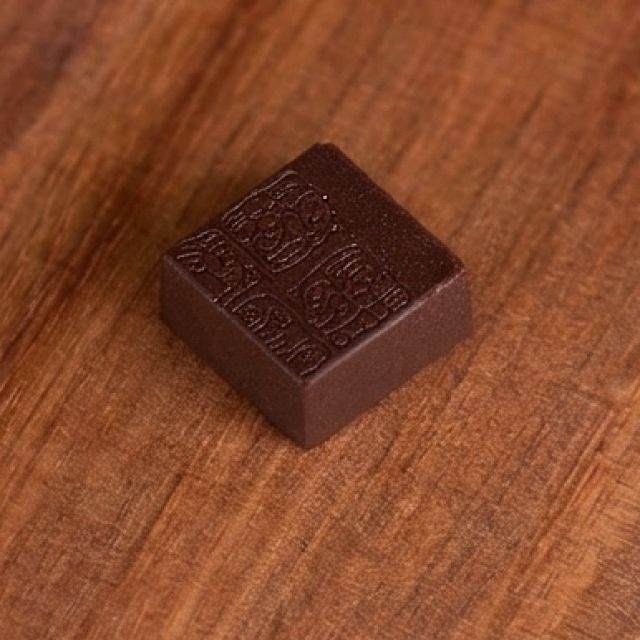
The soft caramel is the most spectacular. Beneath dark chocolate engraved with the house monogram, a flowing caramel waits. Take it in one go and let it spread.
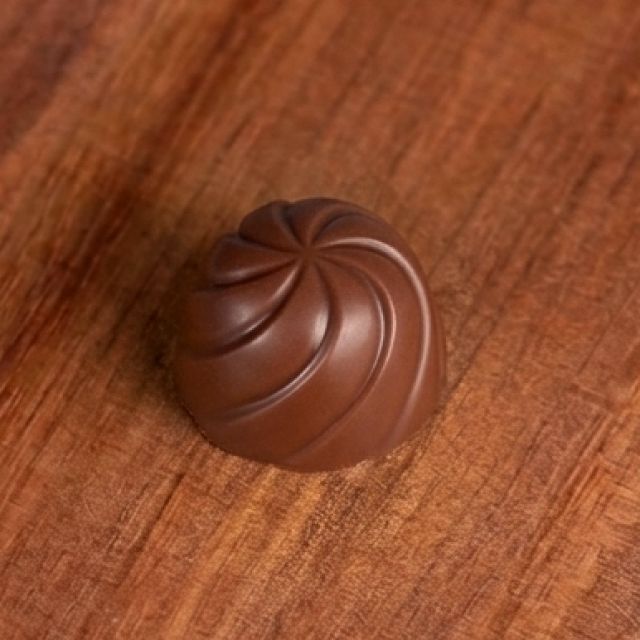
The lemon praline pairs white chocolate with lemon essential oil. A clean, almost lively freshness that lifts the sweetness of the white chocolate instead of weighing it down. The raspberry, in twisted milk chocolate, hides a fruity heart, just tart enough.
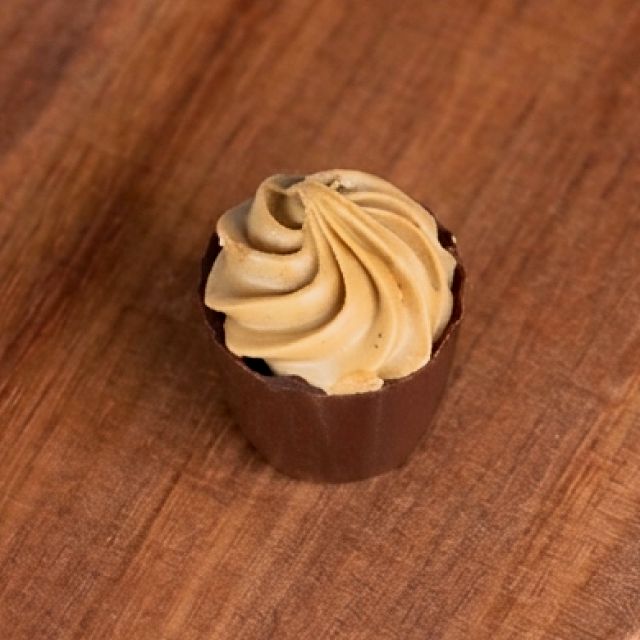
The hazelnut is the round indulgence: a milk chocolate heart and a hazelnut praliné with a toasted taste. The pistachio is finished by hand, a ganache piped into a chocolate cup. And the Ismir, a white chocolate crown with a fragrant filling, is the most singular of the collection, the one people come back for.
Depending on the piece, the heart is a flowing caramel or an airy ganache. And every ingredient is chosen at its finest source: the pistachio comes from Bronte, at the foot of Mount Etna, one of the most sought-after in the world; the hazelnut is a Tonda Gentile Trilobata from Piedmont.
Time to taste
Taste pralines at room temperature, in one bite for the flowing hearts, two for the others. Let the shell melt, then the heart. Move from the freshest to the most intense: lemon first, caramel later. A sip of water between pieces keeps every flavour clear.
There is no magic formula in a box of pralines. There are choices, made one after another since 1974: pure cocoa butter, natural aromas, hands that mould, fill and seal every piece. It is simple to say. It is what makes the difference at the moment the shell gives way.