First comes the touch. Cocoa powder settling on your fingertips, shavings that barely crackle under the teeth, then the ganache gives way and melts, slowly, at the temperature of the mouth. A good truffle is not bitten. It is allowed to melt.
At the Ferme Charlemagne, in Herstal, the truffle holds a special place. It is the simplest piece the house makes, and probably the most demanding. There is no mould to hold it, no shell to hide a flaw. What you taste is the ganache itself, with nothing but a fine coating and a finish.
A ganache, and nothing to hide behind
The principle fits in one line: chocolate and cream, worked into a smooth, supple, glossy emulsion. Everything else is a matter of hands and patience. Too warm and the ganache turns grainy. Too cold and it sets before finding its texture. The right touch is learned over years, not from a recipe card.
This is also where a house shows its honesty. European rules allow up to 5% vegetable fat in what may still be called chocolate. In a ganache the difference is immediate: cocoa butter melts at body temperature, cleanly, with no greasy film on the palate. Charlemagne has refused this tolerance since 1974. Its truffles contain pure cocoa butter as their only fat. No oil, no shortcut. Their flavours come from essential oils and natural aromas.
One by one, by hand
Every truffle is rolled by hand, then coated one at a time. It takes time, and that is precisely the point. The hand feels when the ganache is ready, when it holds without hardening. It gives that slightly irregular shape that tells a truffle made by a person from a bead made by a machine.
The chocolate truffle is often said to have been born in France at the end of the 19th century, named for its resemblance to the mushroom: brown, round, dusted with earth. The story changes with each town that claims it. The idea does not: a modest-looking bite that keeps the best for the inside.
Eight truffles, eight characters
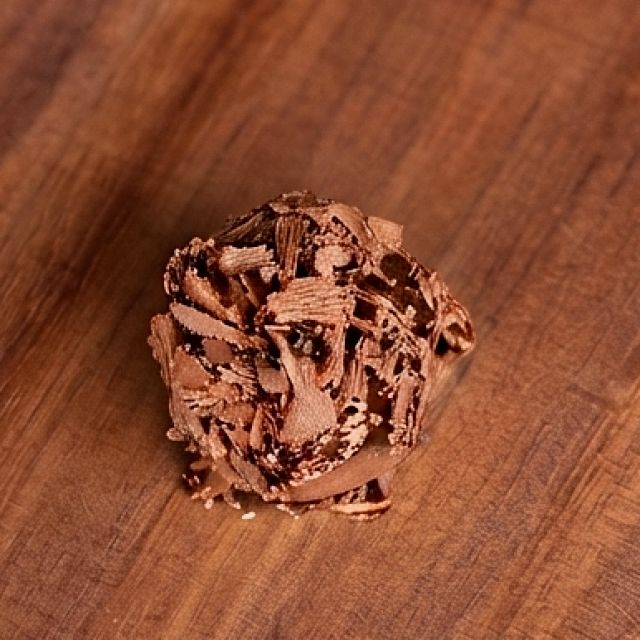
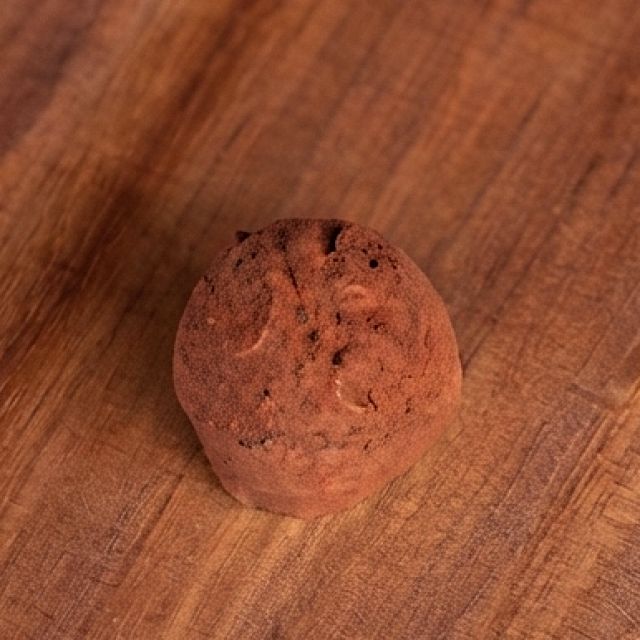
The plain truffle is the most direct: pure ganache rolled in cocoa powder. It tells you everything about the chocolate. The champagne truffle is the signature of the house, dressed in chocolate shavings that catch the light and give way at the first touch.
The white chocolate truffle plays on softness, an ivory ganache under white chocolate shavings. Strawberry brings a fruity ganache under pink shavings, raspberry a brighter ganache dusted with icing sugar.
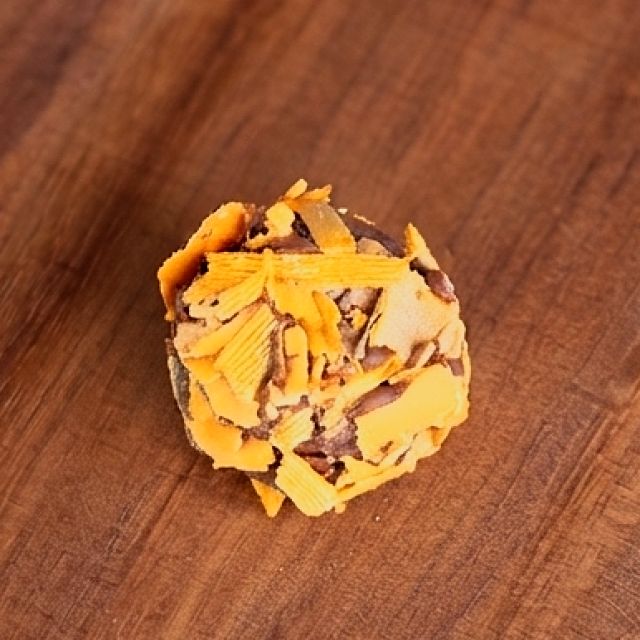
The orange truffle carries the know-how that is unique to the house. Its aroma does not come from a syrup brushed on the surface: orange essential oil is worked into the ganache itself, following the infusion process patented by Denise Courant-Bellefroid, the founder of the house. The citrus becomes part of the structure and does not fade after the first bite. Hazelnut pairs a praline ganache with hazelnut pieces, and salted caramel a caramel ganache with flaked almonds.
Every flavour has its source. The fruit truffles take their taste from fruit pastes, the champagne truffle from marc de champagne, the only alcohol in the whole range. The hazelnut is a Tonda Gentile Trilobata from Piedmont, Italy's most prized variety, round and sweet, with a remarkably delicate roasted note.
How to taste them
Keep truffles cool, but eat them at room temperature. Take them out about twenty minutes beforehand and let the ganache soften. Rest one on your tongue rather than biting it. Start with the plain truffle and finish with the most aromatic. And take your time: a few grams of ganache say more about a house than any speech.
For almost fifty years the Ferme Charlemagne has rolled its truffles the same way, in Herstal, on the Emperor's land. There is nothing secret about it. It takes few words and many hours: good ingredients, pure cocoa butter, and hands that know how to wait.